Tree Removal
Property Clearing That Restores Safe Access
Tree Removal in Jackson for properties with overgrowth, storm damage, and trees threatening structures or access routes
When trees fall across driveways, lean toward buildings, or grow into power lines, they create immediate safety hazards and block access that needs to be restored quickly. Lowe and Basset provides tree removal and brush clearing services across Jackson and rural Waldo County properties where storm damage, overgrowth, or deteriorating trees require cutting, removal, and debris hauling to reopen access routes and eliminate risks to structures and vehicles. The service includes clearing fallen trees after weather events, removing standing trees that pose hazards, and brush clearing that improves visibility and property usability.
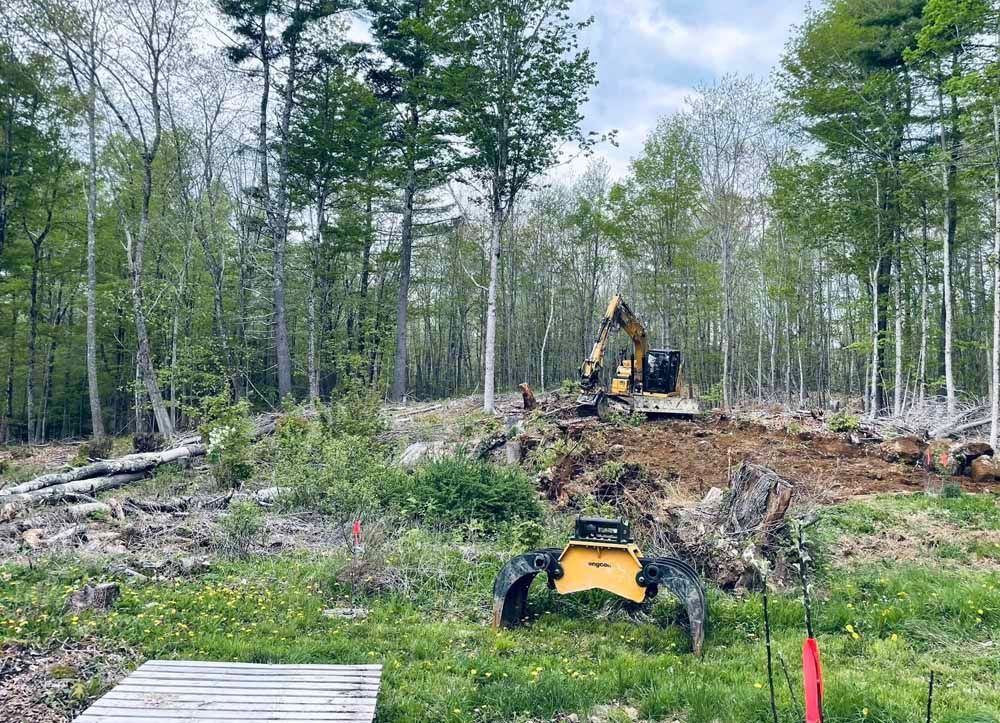
Tree removal involves cutting trees in sections when they're too large or too close to structures for simple felling, removing stumps and root systems if needed for construction or grading work, and hauling away all debris so the property is left clear and usable. Brush clearing removes dense undergrowth, low-hanging branches, and overgrown vegetation that blocks access, creates fire hazards, or prevents proper drainage along edges. Equipment capable of handling difficult terrain allows work on sloped properties and areas with limited access.
Request an on-site assessment to evaluate trees posing immediate risks and identify overgrowth areas affecting access or property safety.
What Tree Removal Actually Accomplishes
Tree removal prioritizes hazards first—trees touching or leaning on structures, blocking driveways or roads, or damaged to the point where failure is imminent. The cutting process uses directional techniques that control where sections fall, which protects surrounding trees, buildings, and landscaping. Debris gets cut into manageable lengths and hauled off-site, leaving the property clear without piles of brush or wood that become obstacles themselves.
After removal, driveways and access routes reopen completely with no obstructions or hanging limbs, sight lines improve across the property, and structures no longer face risks from falling branches or root systems undermining foundations. Storm cleanup eliminates the tangled debris that makes a property unusable and unsafe, and overgrowth clearing restores usable space for parking, storage, or future construction. Properties also drain more effectively once brush and roots stop channeling water toward foundations or blocking natural runoff paths.
Tree removal services include cleanup and hauling as part of the work, which means no secondary effort is required to dispose of cut material or clear debris piles. The service applies to residential properties needing single-tree removal, rural land clearing for access improvement, and post-storm cleanup after multiple trees fall across driveways and yards.
What Property Owners Usually Ask
Tree removal questions often address safety concerns, timing after storms, and what the service includes beyond cutting trees down on properties across Jackson and surrounding areas.
How soon can tree removal happen after a storm damages property?
Response time depends on the severity of the damage and access conditions, but removal typically begins within days of a weather event once it's safe to operate equipment. Trees blocking driveways or threatening structures receive priority over clearing work in less critical areas.
What size trees can be removed safely near buildings?
Trees of any size can be removed near structures using sectional cutting techniques that bring down the tree in controlled pieces rather than felling it whole. This approach prevents damage to roofs, siding, and nearby landscaping, though it requires more time and precision than open-area felling.
Does tree removal include stump grinding or root extraction?
Basic tree removal cuts the tree at or near ground level and removes all above-ground material. Stump grinding and root extraction are available as additional services when the stump location interferes with grading, construction, or driveway work, but they're not required for general clearing.
How is brush cleared on properties with uneven terrain?
Equipment capable of handling slopes and rough ground accesses areas where handheld clearing would be impractical, cutting through dense undergrowth and removing material in a single operation. In Jackson's hilly rural areas, this capability allows clearing along steep driveway edges and wooded slopes without risking equipment or leaving half-finished work.
What happens to debris after tree removal?
All cut material gets hauled away as part of the service, leaving the property clear and ready for immediate use. Debris doesn't get left in piles for later disposal, and there's no need to arrange separate hauling or burning once the work is finished.
Lowe and Basset handles tree removal and brush clearing with equipment suited to difficult property conditions and terrain common across rural Waldo County. Set up a property evaluation to address storm damage, overgrowth, or hazardous trees affecting access and safety on your land.