
House Lot Preparation
Foundation Sites Ready for Construction
House Lot Preparation in Belfast for properties requiring clearing, grading, and drainage setup before building
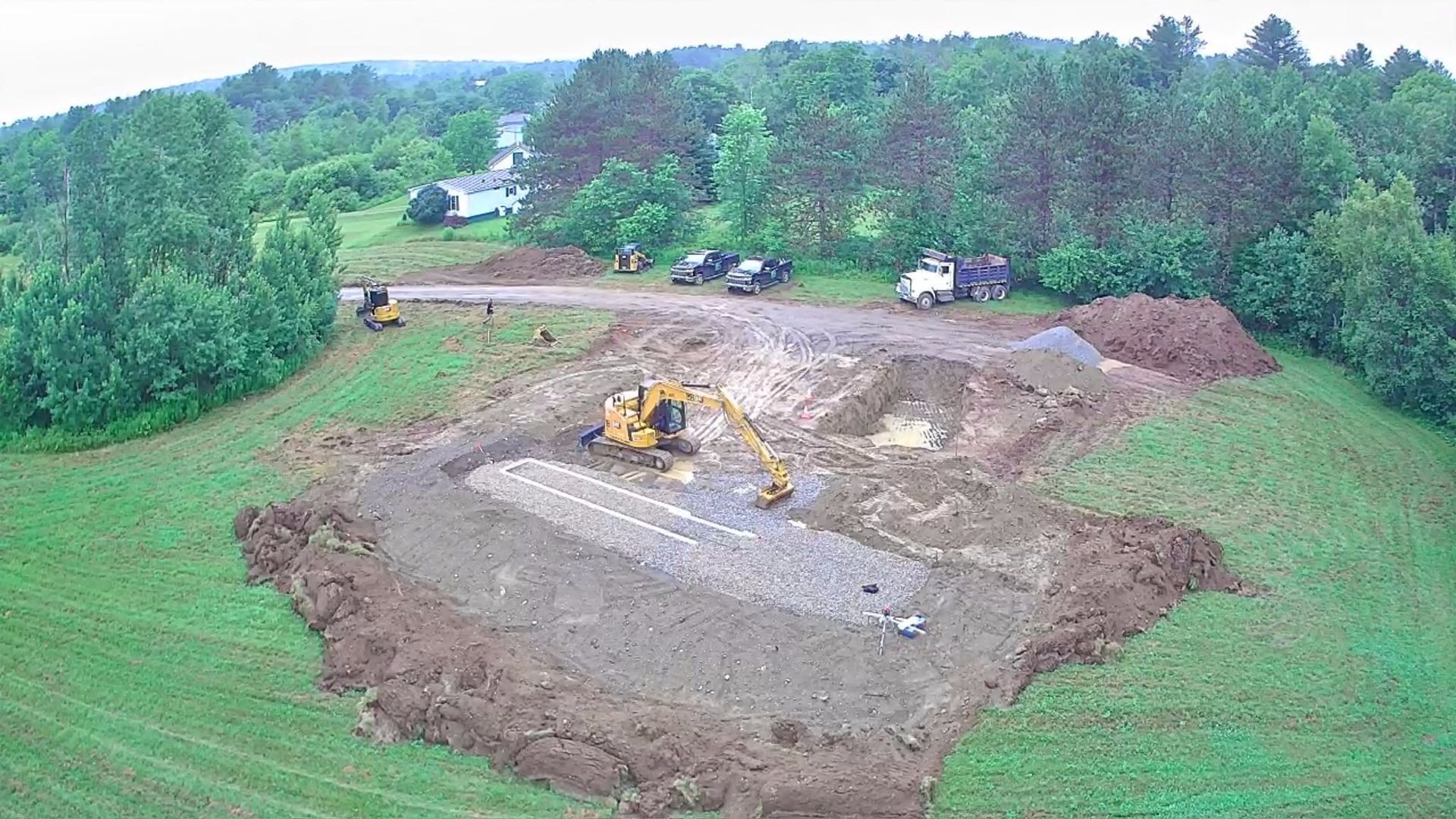
Foundation work can't begin until the building pad is cleared, leveled, and graded to direct water away from where the house will sit. Lowe and Basset prepares residential lots throughout Belfast and Central Maine, handling everything from brush removal and stump grinding to establishing proper elevations for foundation footings. Lot prep determines whether basements stay dry and whether driveways drain correctly after construction is complete, making it the first decision point that affects long-term home performance.
Preparation includes clearing vegetation, removing root systems that interfere with grading, and establishing finish elevations that match engineering plans. Slopes must be calculated to prevent water from flowing toward the foundation while still draining the overall site effectively. Soil is excavated or filled to create level building areas, and compaction ensures the ground won't settle unevenly once the house is framed and weight loads increase.
Arrange an on-site review to assess clearing requirements and drainage planning for your building timeline.
Why Proper Grading Matters for New Construction
Grading establishes the blueprint for how water behaves around a home for decades. Final grade must slope away from the foundation at a consistent rate—typically one inch of drop per foot of horizontal distance for at least six feet—to keep runoff from pooling against basement walls or saturating crawl spaces. In Central Maine, where freeze-thaw cycles are intense, any low spot that collects water can lead to frost heaving, cracked foundations, or ice dams near entryways. Compaction of fill material is equally important; loose backfill settles over the first year, creating depressions that trap water exactly where it shouldn't go.
After lot preparation is finished, the building pad sits level and stable, with clear drainage paths directing runoff toward designated swales or ditches. Driveways are graded to prevent water from running back toward the house, and any low areas are filled and compacted to eliminate future settling. You'll notice that heavy rain moves predictably off the site rather than pooling near the foundation or creating muddy areas where vehicles need to access the property.
Lot prep also includes coordinating with builders to time excavation so foundation contractors can work immediately after grading is complete. Delays between grading and foundation work can allow erosion or soil disturbance, requiring rework. The process may also involve installing temporary erosion controls or silt fencing if slopes are steep or if construction will span multiple seasons.
Common Questions About Lot Preparation
Homeowners building in Belfast and surrounding areas often ask about clearing methods, drainage planning, and how weather affects preparation schedules. These answers clarify what lot prep involves.
What determines whether trees need to be removed versus left in place?
Clearing decisions depend on foundation placement, septic system locations, and how existing vegetation affects drainage flow, with trees inside the building footprint or too close to utility trenches requiring removal.
How is drainage planned before the foundation is poured?
Grading plans establish finish elevations and slope directions that direct water away from the foundation and toward natural drainage paths or installed swales, preventing water from collecting near basement walls.
What happens if ledge or bedrock is encountered during excavation?
Ledge may require blasting or hammering to reach proper foundation depth, a common occurrence in Maine that affects project timelines and sometimes requires adjustments to foundation design.
How long does lot preparation typically take before construction can start?
Timelines vary with lot size, clearing complexity, and weather, but most residential lots are ready for foundation work within several days to a week once equipment arrives and conditions are favorable.
What should be done with stumps and brush removed during clearing?
Material is typically chipped, hauled off-site, or burned if local regulations allow, with stumps ground below finish grade to prevent interference with grading or landscaping.
Lowe and Basset coordinates with builders and homeowners to ensure lot preparation aligns with construction schedules and site-specific conditions. Contact the team at (207) 322-7855 to discuss clearing, grading, and drainage planning for your building project in Central Maine.