Gravel Pad Installation
Stable Foundations for Sheds and Structures
Gravel Pad Installation in Belfast for sheds, garages, and equipment areas requiring level, well-drained bases
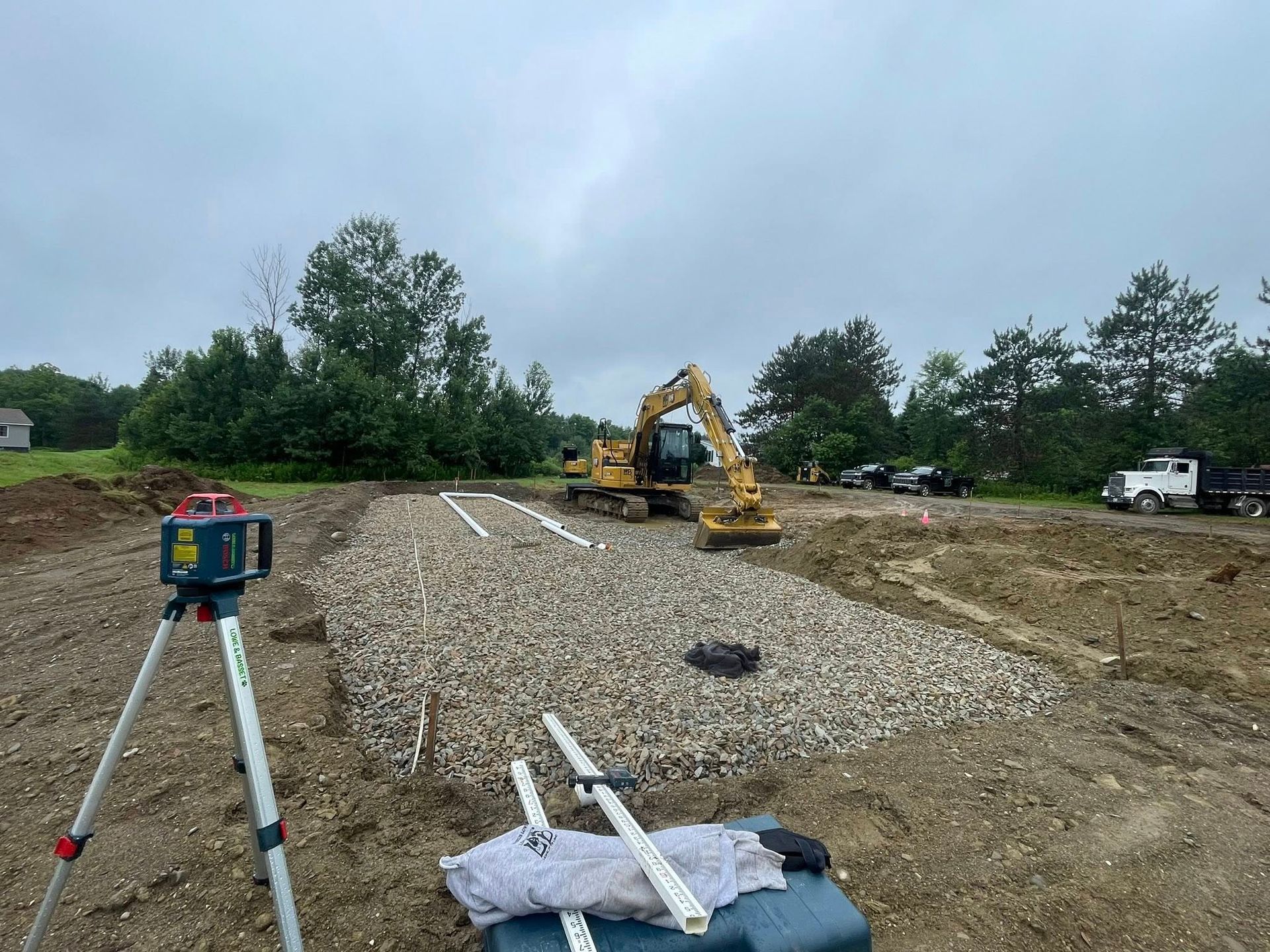
A gravel pad prevents structures from settling, shifting, or sitting in water, but only if the base is graded correctly and the gravel is compacted in layers that distribute weight evenly. Properties in Belfast and Waldo County often need pads for sheds, detached garages, equipment storage, or recreational vehicles, and Maine's freeze-thaw cycles make proper drainage essential to prevent frost heaving and surface deterioration. Lowe and Basset installs gravel pads that include site grading, base preparation, and material compaction, ensuring the foundation stays level and functional through seasonal weather changes. Pad installations are customized to the structure's size, weight, and how water drains across the site.
Gravel pad installation begins with excavating the area to remove organic material and establish a level base. The site is graded to promote drainage away from the pad, and a base layer of larger stone is placed and compacted to create a stable platform. Finer gravel is added on top and compacted in lifts, with each layer locked into place before the next is added. The result is a firm, level surface that sheds water and resists compaction under load.
Request an estimate to review pad sizing, grading requirements, and material specifications for your structure or storage needs.
What Separates a Stable Pad from One That Fails
Stability depends on three factors: proper base preparation, correct gravel gradation, and thorough compaction. Skipping any of these steps results in a pad that settles unevenly, develops soft spots, or traps water that accelerates deterioration. Base preparation removes topsoil and organic material that decompose over time and cause voids beneath the gravel. Gravel gradation matters because uniform, angular stone locks together under compaction, while rounded or oversized material shifts and creates an unstable surface. Compaction eliminates air pockets and ensures each layer supports the weight of the structure or equipment placed on the pad.
Once installation is complete, the pad sits level without high or low spots, and water drains off the surface rather than pooling in depressions. Sheds and garages remain plumb and square because the foundation doesn't shift or settle. Equipment stored on the pad rests on a firm surface that doesn't rut or sink, even during wet periods or after heavy snow. Lowe and Basset grades the surrounding area to direct runoff away from the pad, preventing water from undermining the edges or saturating the base material.
Pad projects also consider access—driveways or pathways to the pad must be graded to prevent runoff from flowing onto the surface, and edges may be defined with larger stone or timber to contain the gravel and prevent spreading. For larger structures or equipment with concentrated loads, additional base depth or geotextile fabric may be used to distribute weight and prevent subsurface soils from mixing with the gravel over time.
Frequent Questions About Gravel Pads
Homeowners and property owners in Central Maine often ask how gravel pads are built and what factors affect their long-term performance. These answers clarify the process and what to expect.
What type of gravel is used for shed and garage foundations?
Crushed stone with angular edges and a range of particle sizes compacts tightly to create a stable surface, typically applied in layers over a base of larger stone that provides drainage and load distribution.
How thick does a gravel pad need to be to support a structure?
Pad depth depends on soil conditions and the weight of the structure, but most residential pads are built with six to twelve inches of compacted gravel over a prepared base, with additional depth for heavier loads or poor soils.
What prevents a gravel pad from washing away during heavy rain?
Proper grading directs water away from the pad, and compaction locks the gravel in place so surface water runs off without displacing material, with edges sometimes reinforced to contain the gravel during runoff events.
How long does it take to install a gravel pad for a standard shed?
Installation typically takes one to two days, depending on site access, base preparation requirements, and whether additional grading or drainage work is needed around the pad area.
Can gravel pads be expanded or adjusted after installation?
Pads can be extended by excavating adjacent areas, adding base material, and compacting new gravel to match the existing surface, though proper tie-in is necessary to prevent separation or settling at the seam.
Lowe and Basset provides gravel pad installation with material delivery and site grading throughout Belfast and surrounding Maine communities. Reach out at (207) 322-7855 to discuss pad specifications and schedule installation for your shed, garage, or equipment storage area.