
Septic System Installation
Site Preparation That Sets Up Septic Longevity
Septic System Installation in Belfast for properties requiring tank placement and leach field excavation
Septic systems fail when excavation doesn't account for soil percolation rates, seasonal water tables, or proper depth requirements. Lowe and Basset handles the excavation and site preparation for septic installations in Belfast, working with licensed septic contractors to ensure tank placement and leach field trenching meet both regulatory standards and the long-term drainage needs of Central Maine properties. The excavation phase determines how well the entire system will function for the next several decades.
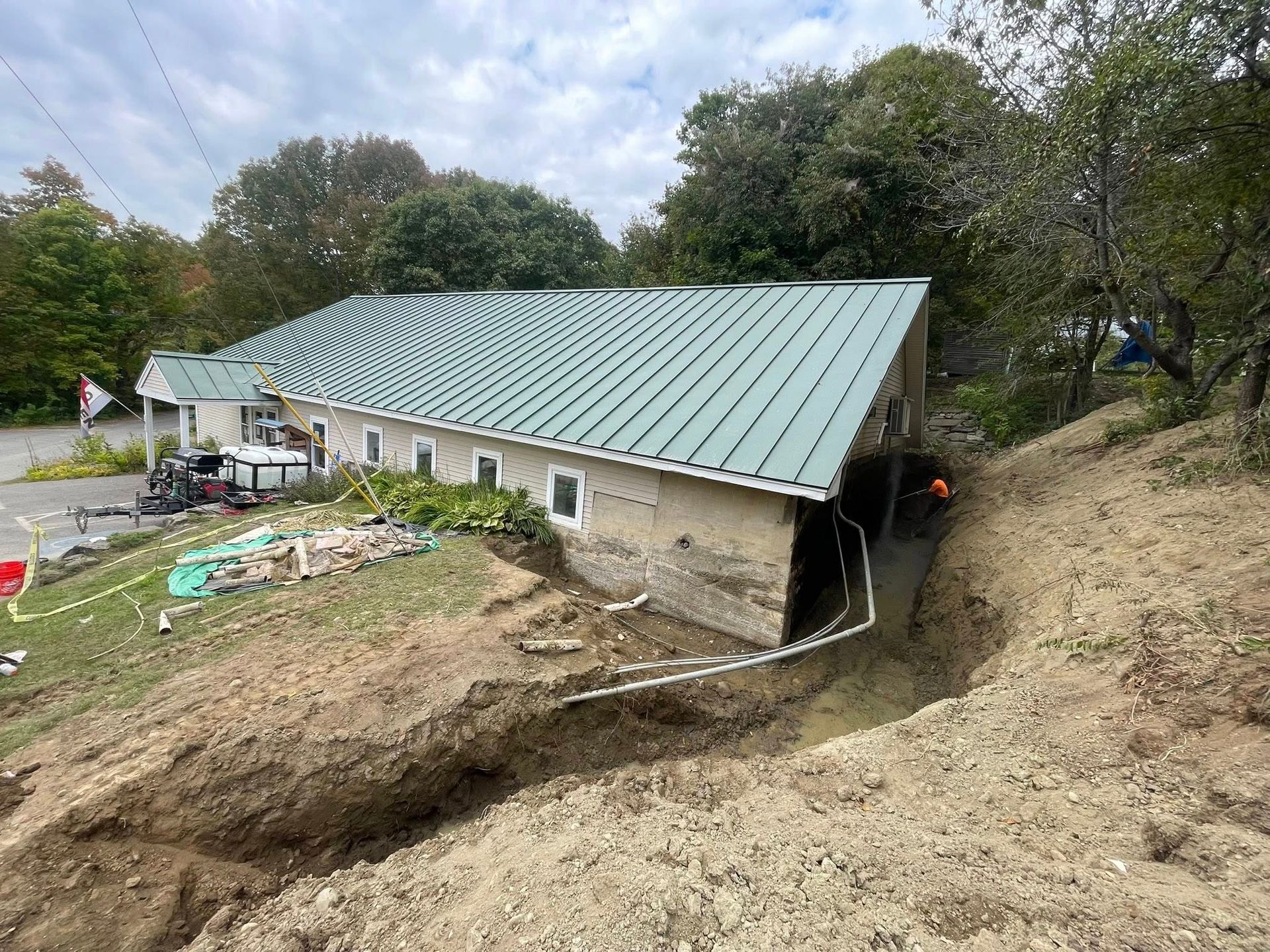
Site preparation involves removing sufficient soil to place the tank at the correct elevation, excavating leach field trenches to the depth and spacing specified by soil testing, and grading the area to prevent surface water from entering the system. The work requires coordination with the septic installer to match excavation dimensions to the specific tank size and field design approved for your property.
Arrange a consultation to discuss excavation requirements based on your septic system design and site conditions.
What Proper Excavation Prevents Over Time
Excavating for a septic system requires removing topsoil and subsoil separately so the area can be backfilled in layers that promote drainage rather than trapping water around the tank. Leach field trenches must be level and positioned to allow effluent to distribute evenly, and the surrounding soil must remain undisturbed to maintain its absorption capacity.
After the excavation is complete and the system is installed, the tank sits stable without settling or shifting, and the leach field receives wastewater at a consistent rate across all distribution lines. Your system processes household wastewater without backup or surface ponding, and the field remains functional through wet seasons because the excavation accounted for drainage and soil conditions from the beginning.
The excavation also includes trenching for any utility lines running to the tank and preparing access routes for future maintenance. Proper grading around the installation area directs surface runoff away from the leach field to prevent premature saturation.
Questions Property Owners Have About Septic Excavation
Homeowners preparing for septic installation often want to understand how the excavation process affects system performance and what site-specific factors matter.
What site conditions affect excavation requirements?
Soil type, water table depth, and bedrock proximity all determine how deep trenches can be excavated and whether additional measures are needed to ensure proper drainage in Belfast's varied soil conditions.
How is the leach field layout determined?
The septic designer specifies trench length, spacing, and depth based on soil percolation tests, and excavation must match those specifications precisely to ensure the field absorbs effluent at the intended rate.
Why does excavation happen before the tank arrives?
The hole must be ready for immediate tank placement to avoid delays, and excavating beforehand allows time to address unexpected conditions like large rocks or high groundwater before the installation crew arrives.
What happens to the excavated soil?
Topsoil is typically stockpiled for final grading after installation, while subsoil may be removed from the site if it's unsuitable for backfill around the tank and field lines.
How does grading affect long-term septic performance?
Surface water must drain away from the leach field to prevent saturation from sources other than the septic system itself, so final grading slopes away from the field and directs runoff to safe areas.
Lowe and Basset coordinates excavation timing and specifications with your septic contractor to ensure the site is prepared correctly before tank delivery. Contact us to schedule septic excavation services and discuss your project timeline.