
Culvert Installation & Replacement
Driveway Drainage That Handles Seasonal Flow
Culvert Installation & Replacement in Belfast for driveways and roads requiring improved water flow and erosion control
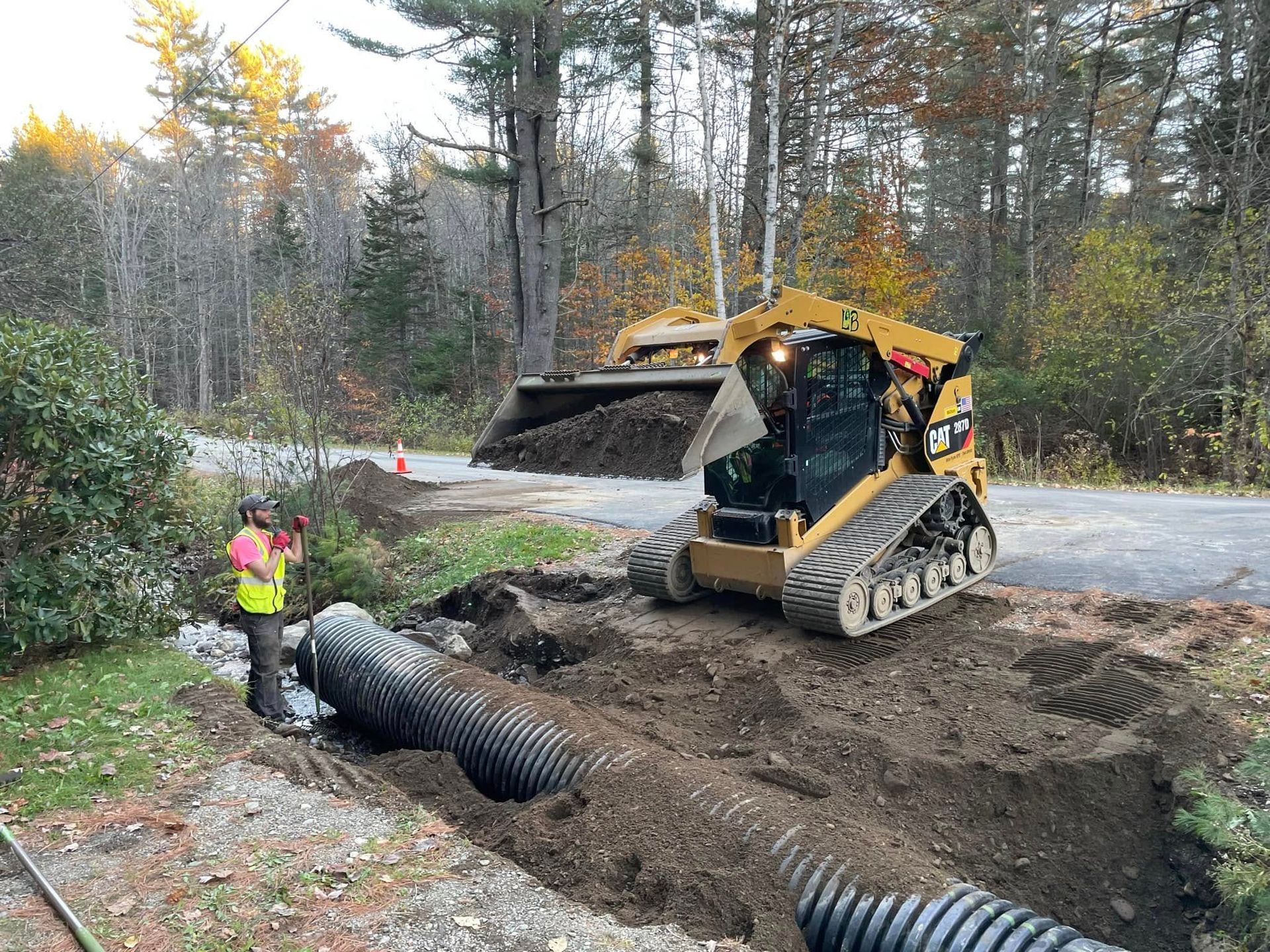
A failing culvert shows itself through driveway washouts, water pooling on the road surface, or erosion that undermines the base material supporting vehicle traffic. Culverts channel water under driveways, camp roads, and access routes, and in Maine, where spring runoff and storm events generate high flow volumes, undersized or damaged culverts can't handle the load. Lowe and Basset installs and replaces culverts for properties throughout Belfast and Waldo County, matching pipe diameter and material to the volume of water that needs to pass through during peak flow periods. Proper installation includes excavation, bedding, and backfill that prevent settling or shifting as seasons change and frost cycles stress the ground.
Culvert work begins with evaluating the drainage path—where water enters, how much volume moves through during heavy rain or snowmelt, and where it exits downstream. Pipe sizing must account for worst-case flow, not just typical conditions. Excavation removes old pipe and prepares a stable base, then new culvert sections are positioned with a slope that promotes flow without creating turbulence that causes erosion at the outlet.
Schedule a driveway assessment to determine culvert sizing and replacement needs based on your property's drainage patterns.
What Culvert Installation Requires
Installation involves more than placing pipe in a trench—culverts must be bedded on compacted material that prevents settling, and backfill must be added in lifts and compacted to avoid voids that lead to driveway collapse. Inlet and outlet elevations are critical; if the culvert is set too high, water backs up and floods the driveway, and if it's too low, sediment accumulates inside the pipe and restricts flow. In rural Maine, where driveways cross seasonal streams or swales, culverts often need headwalls or riprap at outlets to prevent erosion from scouring around the pipe and destabilizing the structure.
After installation, water flows freely under the driveway rather than washing over or around it. You'll notice that runoff clears quickly during rainstorms, and the driveway surface remains intact without ruts or washouts. Erosion stops at the culvert outlet because the pipe directs flow into a controlled channel or stable discharge area. Grading around the culvert directs surface water toward the inlet, ensuring that runoff enters the pipe rather than bypassing it and creating new drainage problems.
Culvert projects may also include replacing deteriorated pipe that has rusted through or collapsed, upgrading undersized pipe that can't handle current flow volumes, or extending existing culverts when driveway widening projects change how water needs to pass underneath. Material selection depends on expected lifespan and load—plastic pipe resists corrosion but may require more bedding support, while metal pipe handles heavy loads but is vulnerable to rust in wet conditions.
What Property Owners Usually Ask
Culvert installation and replacement raise questions about sizing, materials, and how to prevent future drainage failures. These answers address concerns common to Belfast area properties.
What determines the size of culvert pipe needed for a driveway?
Pipe diameter depends on the drainage area contributing runoff, the slope of the culvert, and peak flow rates during storms or snowmelt, with undersized pipe leading to backups and driveway flooding.
How does Maine weather affect culvert performance over time?
Freeze-thaw cycles can shift improperly bedded culverts, and ice buildup at inlets can block flow during spring thaw, making proper installation and periodic maintenance critical for long-term function.
What material is best for culverts in rural properties?
Corrugated plastic pipe resists corrosion and handles typical driveway loads, while metal pipe is used for higher traffic volumes or where additional structural strength is needed, though it may corrode faster in wet conditions.
How long does culvert installation take from excavation to finished driveway?
Most residential culvert projects are completed within one to two days, including excavation, pipe installation, backfill compaction, and driveway surface restoration, depending on site access and soil conditions.
What maintenance is required after a new culvert is installed?
Inlets should be cleared of debris seasonally to prevent blockages, and outlets should be checked for erosion or sediment buildup that could restrict flow or undermine the pipe over time.
Lowe and Basset handles culvert installation and replacement throughout Central Maine, with equipment and experience suited to rural property drainage challenges. Call (207) 322-7855 to discuss culvert needs and schedule installation or replacement work for your driveway or access road.