Driveway Installation & Replacement
Driveways Built for Rural Maine Conditions
Driveway Installation & Replacement in Jackson for properties needing gravel surfaces that handle freeze-thaw cycles and heavy runoff
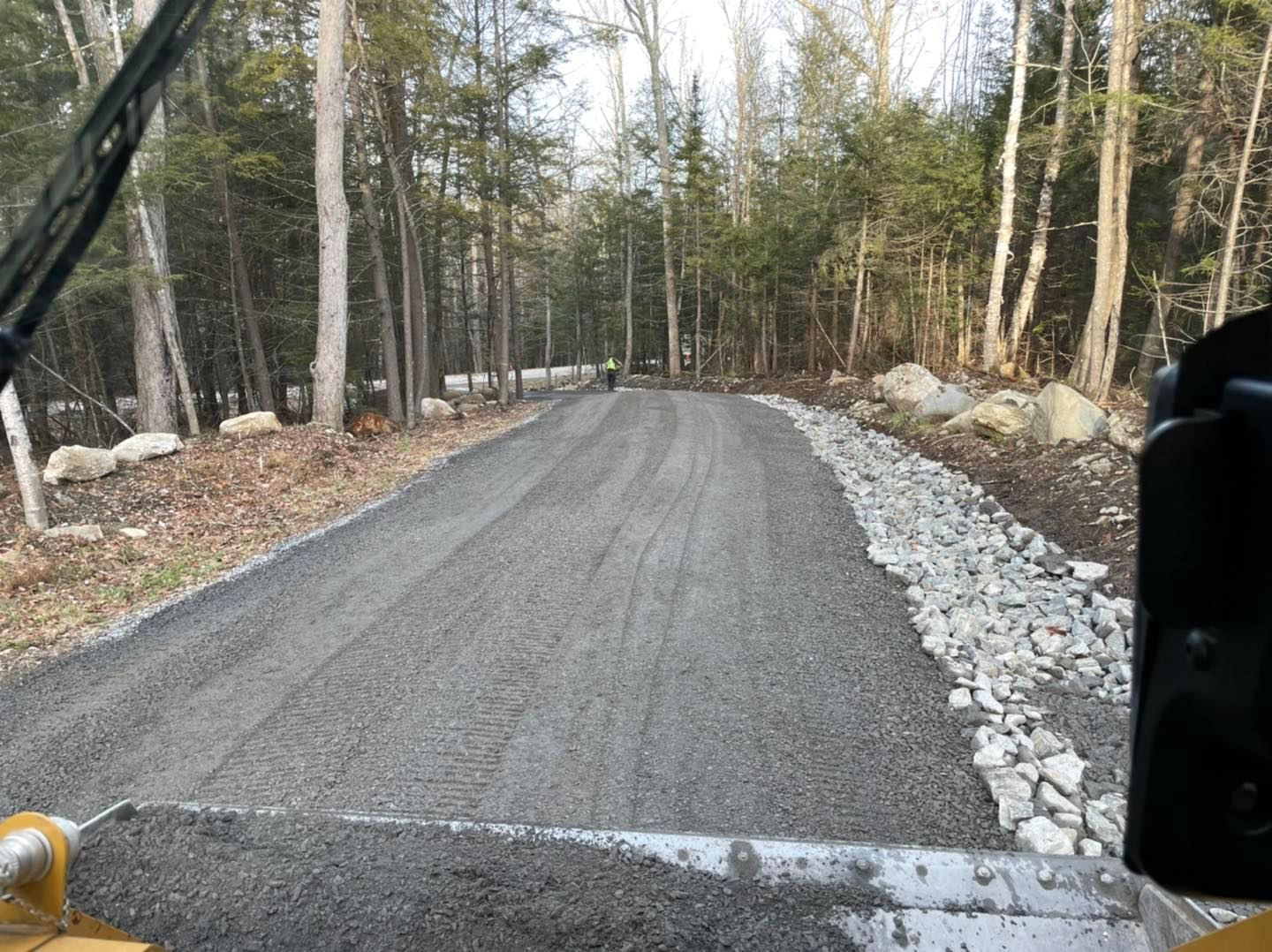
A properly installed gravel driveway handles the seasonal expansion and contraction that comes with Maine's freeze-thaw cycles, channels water away from the travel surface, and maintains a firm base that doesn't sink or rut under vehicle weight. Lowe and Basset handles driveway installation and replacement in Jackson and across rural Waldo County properties where long access roads, sloped terrain, and heavy spring runoff demand careful grading, adequate drainage integration, and durable aggregate materials that stay stable year-round. The work begins with site preparation that addresses underlying soil conditions and water movement patterns before any gravel gets placed.
Gravel driveway construction involves excavating unstable topsoil, establishing proper grade for water flow, installing culverts where drainage crosses the driveway path, and building up compacted layers of base stone topped with finer gravel for the travel surface. The grading creates a crowned or sloped profile that sheds water to the sides, and the base layer provides load-bearing support that prevents the surface from sinking into soft ground during wet periods or spring thaw.
Schedule a site evaluation to review drainage patterns, soil conditions, and access requirements that affect driveway design and material selection.
Why Proper Site Prep Determines Driveway Performance
Durable driveway construction depends on removing organic material and soft soils that compress under load, installing drainage structures before gravel placement, and compacting each layer to create a stable foundation. Culvert sizing and placement prevent water from washing out sections of the driveway during heavy rain or snowmelt, which is critical in areas where runoff concentrates naturally. Base stone gets compacted in lifts, and the surface layer uses angular gravel that locks together rather than rounded stone that shifts under tires.
After installation, the driveway surface remains firm under vehicle weight without forming ruts or soft spots, water flows to the edges and away from the travel lane rather than pooling in low areas, and the gravel stays in place instead of migrating toward the center or washing downhill. Freeze-thaw cycles cause minimal heaving because the base drains freely and doesn't trap moisture that expands when frozen. Lowe and Basset also includes erosion prevention along edges and slopes, which keeps the driveway intact during spring runoff and heavy storm events common in Central Maine.
Driveway replacement addresses existing surfaces where the base has failed, drainage no longer functions, or repeated grading has thinned the material to the point where the underlying soil shows through. The service applies to both residential driveways and private roads serving rural properties, with material selection and construction methods matched to anticipated vehicle loads and seasonal weather exposure.
Questions Before Starting Your Project
Driveway installation questions often focus on material choices, drainage integration, and how site conditions in Jackson and Waldo County affect construction methods and long-term performance.
What makes a gravel driveway last through Maine winters?
A well-draining base that doesn't trap water, adequate crown or slope to shed precipitation, and properly sized culverts prevent frost heaving and washouts. The base layer must sit on stable soil or geotextile fabric that prevents mixing with soft ground underneath, and surface gravel needs enough angularity to resist displacement under snow plowing and vehicle traffic.
How is drainage integrated into driveway construction?
Culverts get installed wherever natural water flow crosses the driveway path, sized to handle peak runoff during spring snowmelt and heavy rain. Side ditches or gravel shoulders direct water away from the travel surface, and the driveway grade maintains consistent flow toward drainage points rather than allowing ponding in low spots.
What type of gravel works best for the surface layer?
Crushed stone or processed gravel with a mix of particle sizes locks together and compacts into a stable surface, while rounded river rock or pea gravel rolls underfoot and migrates easily. The top layer typically uses three-quarter-inch stone mixed with fines that fill gaps and create a smooth, firm travel surface.
How does driveway grading prevent erosion on sloped properties?
Grading creates a consistent pitch that moves water at controlled speeds, and drainage structures like check dams or stone-lined swales slow runoff before it gains enough velocity to cut channels. In Jackson's hilly terrain, proper grading also reduces sediment washing onto roads or neighboring properties during storms.
When should an existing gravel driveway be replaced instead of resurfaced?
Replacement becomes necessary when the base has deteriorated to the point where soft spots and rutting reappear immediately after grading, when drainage failures cause repeated washouts, or when the original construction lacked adequate depth and proper materials. Adding more surface gravel to a failed base only provides temporary improvement and wastes material.
Lowe and Basset approaches driveway installation with attention to site-specific conditions and equipment capable of handling difficult terrain across rural properties. Arrange a consultation to review your property's access needs, drainage challenges, and soil conditions that affect driveway design and material requirements.