Retaining Wall Installation
Slopes That Stay Put Through Every Season
Retaining Wall Installation in Jackson for properties with erosion concerns and drainage challenges
Lowe and Basset builds retaining walls in Jackson and surrounding areas for residential and commercial properties dealing with unstable slopes, washout zones, and water pooling after heavy rain. The work addresses both structural needs and drainage management, with proper grading integrated during installation to redirect runoff away from foundation zones and prevent soil loss. These systems are designed for Maine terrain, where freeze-thaw cycles, seasonal snowmelt, and spring storms put constant pressure on hillsides and embankments.
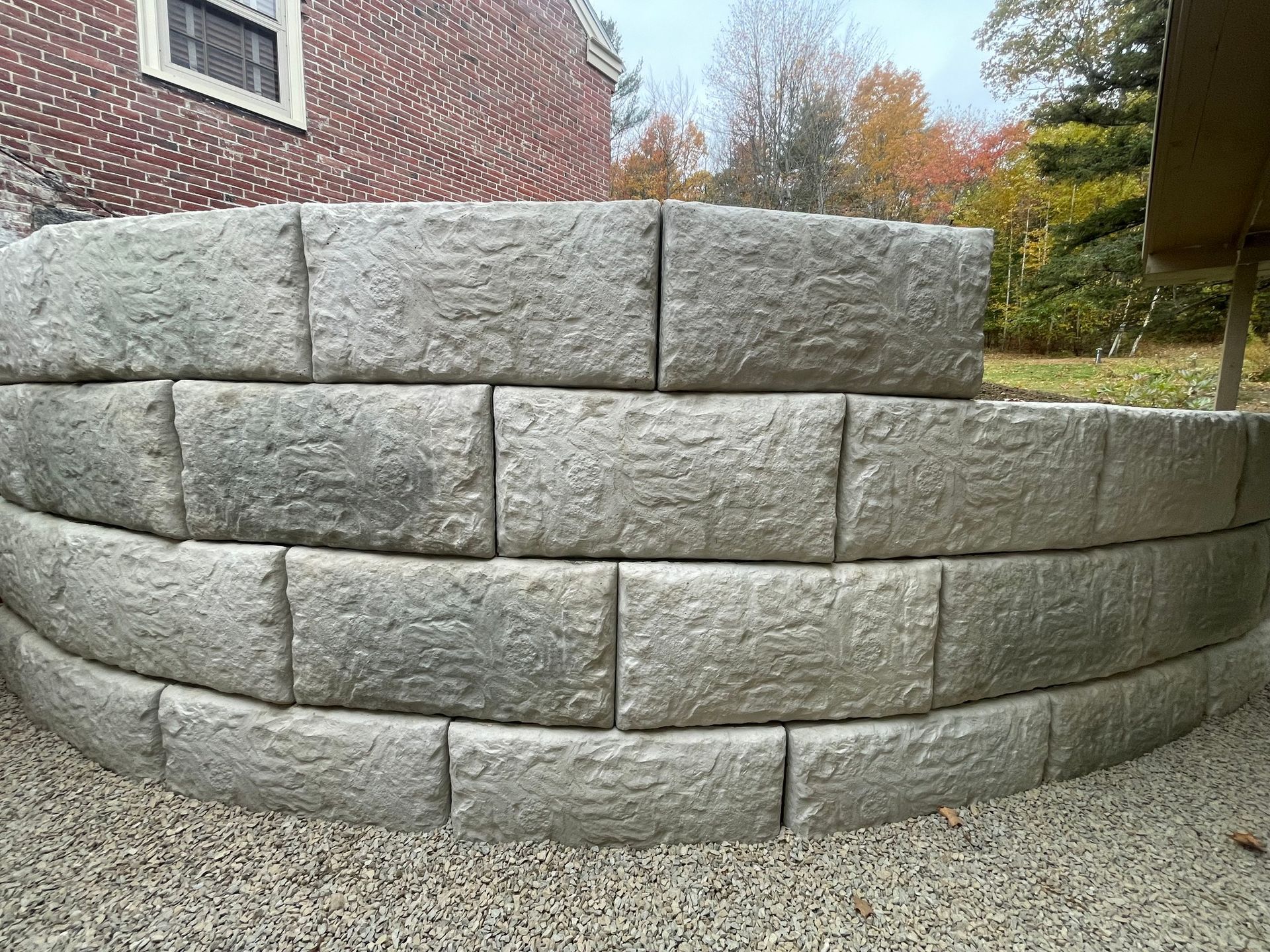
Retaining wall construction involves excavating the slope to stable subgrade, installing drainage layers behind the wall face, and setting stone or modular block units with engineered backfill compaction. Each wall is built to manage hydrostatic pressure while preventing erosion from undermining the base. Proper grading ties the wall into the existing landscape, so water moves predictably rather than pooling at the wall line or cutting channels through unprotected soil.
Schedule a property evaluation to review slope conditions and discuss retaining wall placement for your site.
What Proper Installation Prevents Long-Term
You need base preparation that accounts for frost depth and seasonal ground movement, especially where Maine winters drive freeze-thaw shifts that can lift or tilt walls built on inadequate footings. Stone retaining walls and structural block systems are set with drainage aggregate behind the wall face, allowing groundwater to filter down rather than building pressure that pushes the wall forward. Grading work during installation establishes positive drainage away from the wall, so runoff from upslope areas doesn't concentrate at weak points.
Once the wall is complete, you'll notice soil remains in place during heavy rain, water exits through designated drainage points instead of washing over the slope, and planting beds or lawn areas above and below the wall stay level rather than slumping or eroding. Properties with previously unstable embankments become usable yard space, and foundation zones stay dry because runoff is redirected before it reaches the house.
The system includes backfill compaction in lifts, filter fabric to separate drainage aggregate from native soil, and cap stones or top courses that finish the wall and prevent water intrusion from above. Walls built for decorative purposes follow the same structural principles, since even low garden walls need drainage and frost-proof footings to remain stable through multiple seasons.
What Property Owners Usually Ask
Retaining wall projects raise questions about material selection, drainage integration, and site preparation. These answers cover installation details and what to expect during construction in Jackson and nearby Maine communities.
How deep does the base need to be for a retaining wall in Maine?
The base excavation must extend below frost line depth, typically 48 inches in this region, to prevent heaving during freeze-thaw cycles. Walls built on shallow footings will shift or tilt within the first winter as frozen ground expands beneath the structure.
What happens to water behind the retaining wall?
Drainage aggregate and filter fabric installed behind the wall face allow groundwater to percolate down to weep holes or perforated drain pipe at the base. This prevents hydrostatic pressure from building up and pushing the wall forward, which is a common failure point when drainage isn't properly integrated.
When should retaining wall installation be scheduled?
Construction works best during dry months when soil is workable and compaction can be controlled, typically late spring through fall. Wet or frozen ground makes proper base preparation and backfill compaction difficult to achieve.
What materials work best for Maine slopes?
Stone walls and reinforced block systems both perform well when installed with proper drainage and frost-depth footings. Material choice depends on wall height, slope angle, and whether you need tiered terraces or a single-level wall to manage elevation change.
How does grading affect retaining wall performance?
Proper grading above the wall directs surface runoff away from the structure before it can concentrate and cause erosion. Slopes that drain toward the wall rather than away from it will eventually undermine even well-built systems by saturating the backfill and overloading drainage capacity.
Lowe and Basset designs retaining wall systems based on site-specific slope conditions and drainage patterns observed during property evaluation. Arrange an on-site consultation to review your property's erosion concerns and discuss structural options that fit the terrain.