Site Prep & Excavation
Ground Work Built for Maine Conditions
Site Prep & Excavation in Belfast for properties requiring grading, trenching, or construction preparation
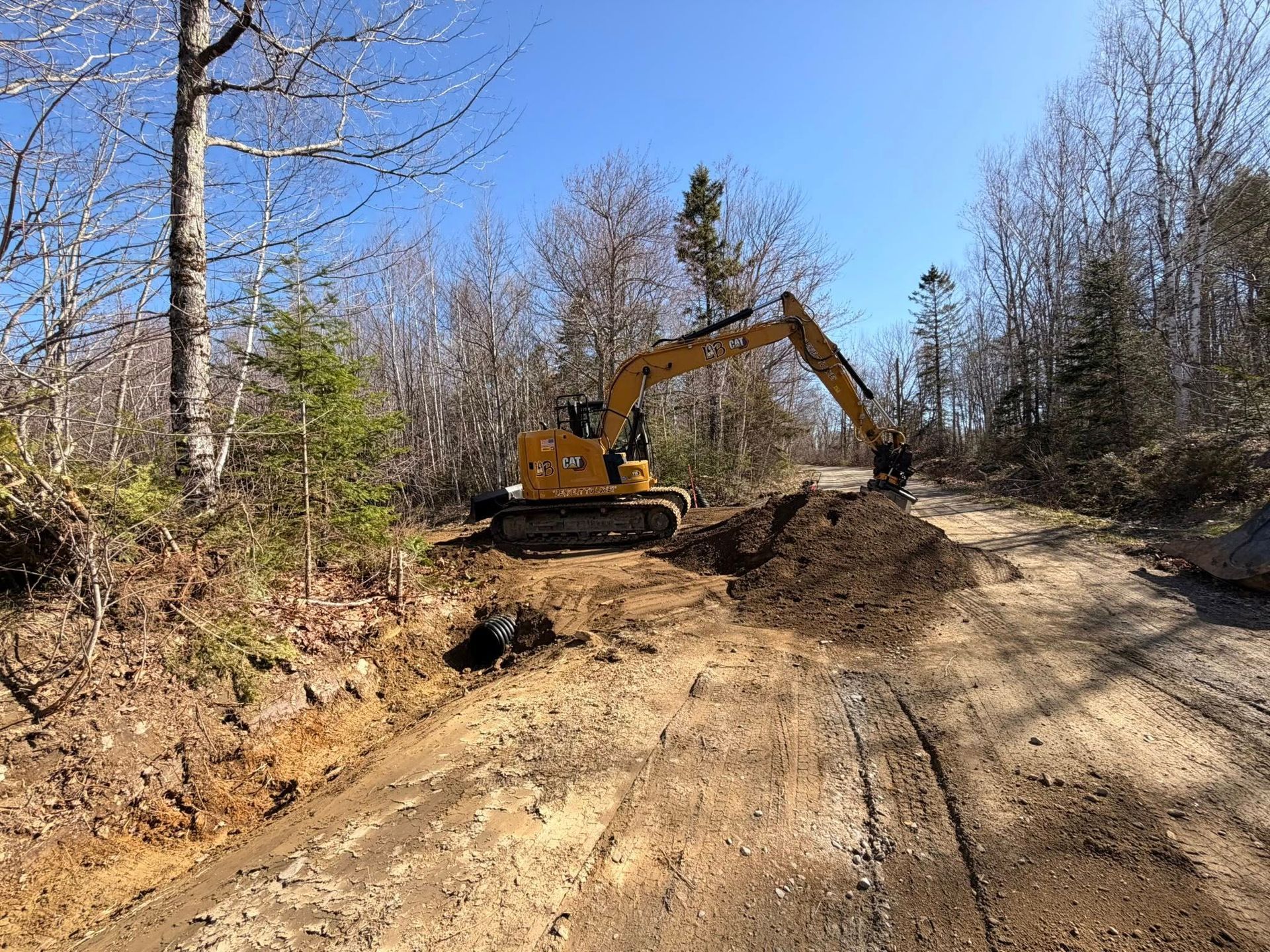
Waldo County terrain presents drainage challenges and subsurface conditions that determine how construction sites perform over time. Lowe and Basset handles site prep and excavation for residential and commercial properties throughout Belfast and Central Maine, addressing everything from foundation grading to utility trenching. Properties with steep grades, heavy clay soils, or seasonal water movement require earthmoving that accounts for how water travels across the site once construction begins.
Excavation involves more than removing dirt—proper site prep includes evaluating existing drainage patterns, establishing finish grades that direct water away from structures, and compacting disturbed soils to prevent settling. Work may include trenching for utilities, creating level building pads, or reshaping land to meet engineering specifications. Each site receives grading that reflects soil type, slope direction, and how runoff will behave during spring thaw or heavy rainfall.
Schedule a site evaluation to review grading requirements and drainage considerations specific to your property.
What Proper Site Prep Accomplishes
Site grading establishes the foundation for everything built afterward, and Maine's freeze-thaw cycles make precision particularly important. Finish grades must slope away from foundations at a minimum rate to prevent water from pooling against basement walls or crawl spaces. Compaction of fill material determines whether driveways, walkways, or pads will settle unevenly after the first winter. Equipment selection depends on soil conditions—wet clay requires different handling than sandy loam, and rocky subsurface layers may require excavation adjustments mid-project.
Once grading is complete, you'll notice water moving predictably across the site rather than collecting in low spots. Driveways sit level without dips that trap runoff, and foundation areas remain dry during seasonal rain. Trenches for utilities are backfilled and compacted to match surrounding grade, eliminating the soft spots that cause paving to crack or settle. Lowe and Basset coordinates timing with contractors to keep construction schedules on track while ensuring each phase of earthwork meets specifications before the next trade begins work.
Site prep also includes clearing vegetation, removing stumps, and stockpiling topsoil for finish grading. Projects may require perimeter swales to redirect surface water, or cut-and-fill operations to balance earth quantities and reduce material hauling costs. The goal is a stable, well-drained site that supports construction without requiring rework after the first seasonal cycle.
Questions Homeowners and Contractors Often Ask
Site prep and excavation projects raise practical questions about timing, soil management, and how Maine weather affects the work. These answers address common concerns for properties in Belfast and Central Maine.
What happens to topsoil during excavation?
Topsoil is typically stripped and stockpiled separately before grading begins, then redistributed as finish material once structural earthwork is complete, preserving the organic layer needed for landscaping and vegetation establishment.
How does spring runoff affect site grading decisions?
Grading plans account for seasonal water flow by establishing swales or berms that intercept runoff before it reaches foundation areas, particularly important in Belfast where spring thaw and rain can coincide for weeks.
What determines how deep trenches need to be for utilities?
Trench depth depends on frost line requirements, utility type, and whether lines need protection from vehicle loads, with water and sewer lines typically placed below the frost depth to prevent freeze damage.
When is the best time to schedule excavation work?
Late summer and fall typically offer the driest soil conditions for efficient excavation and compaction, though projects can proceed year-round with adjustments for frozen ground or seasonal water tables.
What equipment is used for different site conditions?
Tracked excavators handle wet or uneven terrain, while grading is often completed with dozers or skid steers depending on site access and precision requirements for finish elevations.
Lowe and Basset brings experience with Waldo County terrain and the drainage challenges common to rural Maine properties. Request a consultation to discuss site-specific grading needs and project timelines for your construction or land improvement plans.