Drainage Solutions
Water Flow That Stops Property Damage
Drainage Solutions in Belfast for yards with standing water, erosion, or saturated ground near foundations
Standing water in a yard signals that runoff has nowhere to go, and in Maine, where spring thaw and heavy rain overlap for weeks, poor drainage creates muddy conditions that damage lawns, erode driveways, and saturate soils near foundations. Properties in Belfast and Waldo County often contend with clay soils that don't absorb water quickly and terrain that concentrates runoff in low spots. Lowe and Basset installs drainage systems that redirect water away from structures and problem areas, using ditching, grading, and runoff control methods tailored to how water moves across each property during peak flow periods.
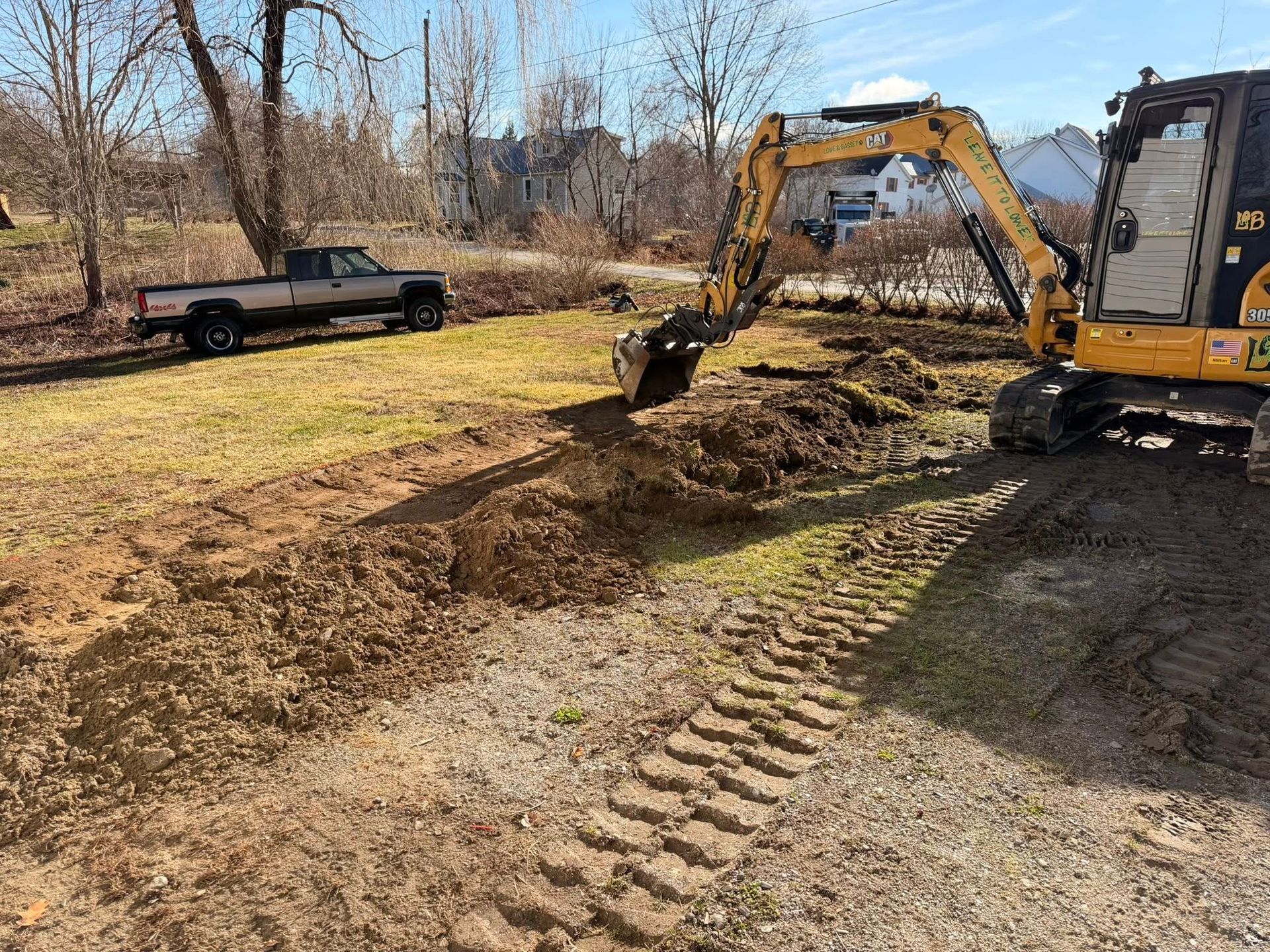
Drainage correction starts with identifying where water enters the property, where it collects, and where it needs to exit. Solutions may include perimeter ditches to intercept runoff before it reaches buildings, grading adjustments to eliminate low spots, or swales that channel water toward natural drainage paths. Each system is designed to handle seasonal volume without eroding or overflowing during the wettest months.
Request a property assessment to identify drainage issues and discuss correction options based on your site's topography.
How Drainage Systems Address Water Problems
Effective drainage relies on establishing a controlled path for water to follow from where it collects to where it can safely exit the property. This might involve cutting shallow ditches along driveways to prevent runoff from eroding gravel, installing culverts under access roads to allow water to pass through rather than over the surface, or reshaping slopes so gravity pulls water away from foundations and toward perimeter swales. In areas with heavy clay, subsurface drains may be needed to relieve hydrostatic pressure that keeps soils saturated even after surface water drains.
Once drainage work is complete, water no longer pools in the yard after rainstorms, and muddy areas dry out within a reasonable timeframe. Driveways stop eroding because runoff is intercepted before it crosses gravel surfaces. Basements and crawl spaces remain dry because water is diverted before it saturates soils adjacent to foundation walls. You'll notice that lawns recover from wet periods faster, and vehicles can access the property without creating ruts during shoulder seasons.
Drainage projects also consider long-term maintenance—systems must remain functional as vegetation regrows and seasonal debris accumulates. Ditches are graded with slopes that promote flow without eroding, and outlets are positioned to prevent downstream problems. In some cases, erosion control fabric or stone lining is added to high-flow areas to protect against scouring during peak runoff events.
Answers to Frequent Drainage Questions
Property owners dealing with water problems in Belfast and Central Maine often have similar concerns about how drainage systems work and what to expect. These answers address those practical considerations.
What causes water to collect in certain areas of a yard?
Low spots, compacted soils, or grading that directs runoff toward rather than away from problem areas create conditions where water has no outlet, particularly in clay soils common to Waldo County that drain slowly.
How do ditches prevent water from damaging driveways?
Ditches intercept runoff before it flows across gravel or pavement, redirecting it along the edge of the driveway toward a natural drainage path or culvert, which prevents erosion and washout of base material.
What is the difference between surface drainage and subsurface drainage?
Surface drainage uses grading, swales, and ditches to move water across the ground, while subsurface drainage uses buried perforated pipe to relieve groundwater pressure in soils that remain saturated below the surface.
When should drainage work be done to avoid wet season delays?
Late summer and fall offer the driest conditions for excavation and grading, making it easier to shape drainage paths and install systems before winter, though urgent repairs can proceed during wetter months with equipment adjustments.
How long does it take to see results after drainage improvements are installed?
Results are immediate once grading or ditching is complete—water follows the new paths during the next rainfall, though full effectiveness becomes clear during the first major storm or spring thaw.
Lowe and Basset addresses drainage challenges specific to Maine properties, from seasonal runoff to clay soil saturation. Schedule a site visit to evaluate water flow patterns and discuss solutions that protect your property from ongoing erosion and water damage.